
Choosing the right kitchen colour combination is one of the most important decisions when designing or renovating a kitchen. It is not just about visual appeal—it directly affects brightness, space perception, cleanliness, comfort, and even your mood while cooking. In Indian homes, where kitchens are used intensively every single day, a poorly chosen colour combination can make the space feel cramped, dull, or extremely difficult to maintain.
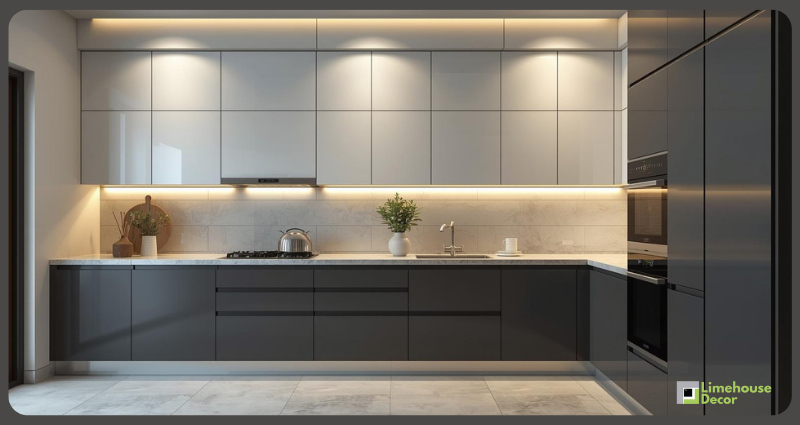
Whether you are planning a new modular kitchen or upgrading an existing one, the colours you select will define how practical and welcoming your kitchen feels for years to come. In this detailed guide, you’ll learn how to pick the best kitchen colour combination based on kitchen size, layout, lighting, materials, and Indian lifestyle needs—without relying blindly on trends or online inspiration images.
Why Kitchen Colour Combination Matters
A well-planned kitchen colour combination plays a major role in both functionality and aesthetics. The right colours can completely transform how a kitchen looks and feels.
A thoughtful colour combination helps to:
- Make a small kitchen look bigger and less cluttered
- Improve both natural and artificial lighting
- Create a clean and organised visual appearance
- Increase the overall resale value of your home
- Coordinate walls, cabinets, countertops, and flooring smoothly
In Indian kitchens, where heat, oil splashes, moisture, and dust are common, colour selection must strike the right balance between style and practicality. This is why professional interior designers always start kitchen planning with colour strategy before finalising layouts or materials.
Step 1: Understand Your Kitchen Size & Layout
Best Kitchen Colour Combination for Small Kitchens
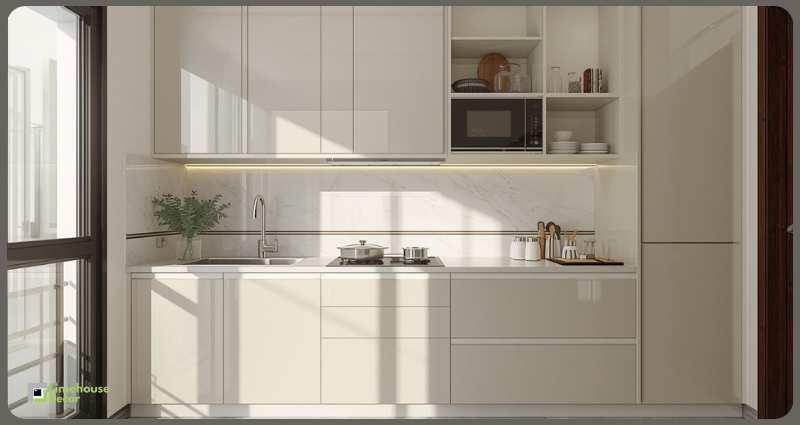
For compact kitchens and apartments, colour choice becomes even more critical. Light and neutral shades help reflect light and prevent the kitchen from feeling boxed in.
Key guidelines for small kitchens:
- Use light colours that reflect maximum light
- Avoid strong contrasts between walls and cabinets
- Stick to one main colour with subtle accents
Recommended kitchen colour combinations for small spaces:
- White + light grey
- Beige + cream
- Soft pastel blue + white
These combinations visually expand the space and are especially suitable for small modular kitchens commonly found in Indian apartments. If you’re planning a compact modular setup, you can also explore our detailed guide on modular kitchen design solutions to align layout and colour perfectly.
Colour Choices for Large Kitchens
If you have a spacious kitchen or an open kitchen layout, you can afford to be bolder with colours.
For large kitchens:
- Darker cabinet colours work well
- Two-tone or contrast kitchens look elegant
- Matte finishes add a premium feel
Popular combinations include:
- Navy blue + white
- Olive green + beige
- Charcoal grey + wood finish
These colour schemes add depth and character without overwhelming the space.
Step 2: Check Natural & Artificial Lighting
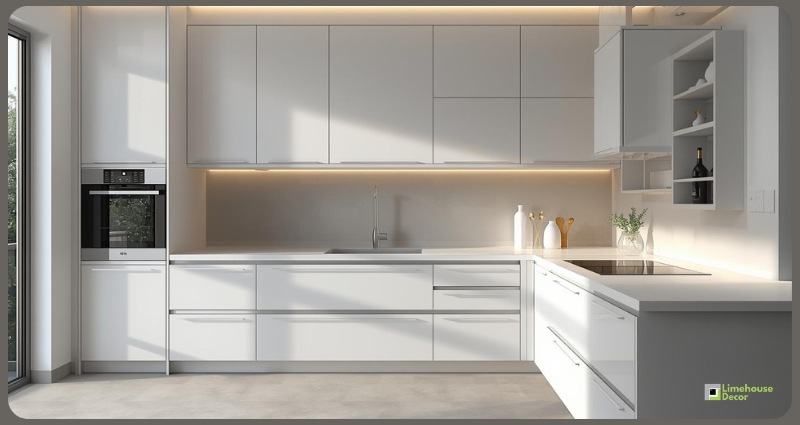
Lighting plays a crucial role in determining how your kitchen colour combination will actually appear in real life.
Low-Light Kitchens
If your kitchen has limited sunlight or is located away from windows:
- Choose warm and light shades
- Avoid dark greys, blacks, and deep blues
Best options for low-light kitchens:
- Ivory + soft yellow
- Light peach + white
- Cream + light wood
These colours bounce artificial light better and keep the kitchen cheerful.
Well-Lit Kitchens
If your kitchen receives ample daylight:
- You can experiment with deeper or cooler shades
- Matte and satin finishes look more refined
Stylish choices include:
- Forest green + white
- Blue-grey + beige
- Black + walnut wood (ideal for modern homes)
Good lighting allows darker colours to shine without making the kitchen look dull.
Step 3: Match Colours with Kitchen Cabinets
Cabinets occupy the largest visual area in the kitchen, so your kitchen colour combination should revolve around cabinet finishes.
Popular Cabinet-Based Colour Combinations
- White cabinets + grey walls
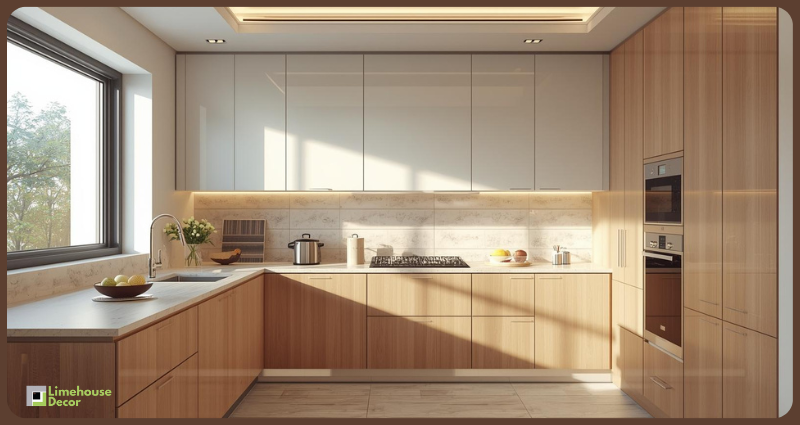
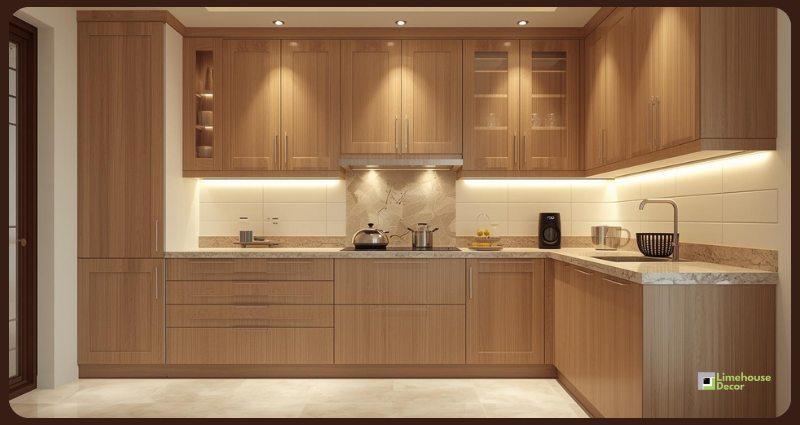
- Wooden finish cabinets + cream walls
- Two-tone cabinets (white upper cabinets + darker lower cabinets)
Pro Tip: Always keep overhead cabinets lighter in colour. This prevents the kitchen from looking heavy and improves openness—especially important in Indian kitchens with limited height.
If you’re finalising materials along with colours, our guide on modular kitchen cost per sq ft in India can help you plan smartly within budget.
Step 4: Choose Colours Based on Countertop & Backsplash
Your countertop and backsplash should complement the cabinets, not compete with them.
Safe Kitchen Colour Combination Formula
- Dark countertop → Light cabinets
- Light countertop → Medium or dark cabinets
Reliable combinations include:
- Black granite + white cabinets
- White quartz + grey cabinets
- Beige marble + wooden cabinets
This balance ensures visual harmony and long-term appeal.
Step 5: Pick Colours That Are Easy to Maintain
Indian kitchens deal with oil stains, steam, turmeric marks, and dust daily. Maintenance should never be ignored while selecting a kitchen colour combination.
Low-Maintenance Colour Choices
- Light grey
- Beige
- Soft brown
- Muted green
Avoid using pure white on all surfaces unless you are comfortable with frequent cleaning. Slightly toned neutrals hide stains much better and age gracefully.
Step 6: Follow Simple Colour Rules Designers Use
Professional designers often follow the 60–30–10 rule to maintain balance:
- 60% – Main colour (walls or major cabinets)
- 30% – Secondary colour (cabinets or backsplash)
- 10% – Accent colour (handles, tiles, décor)
Applying this rule keeps your kitchen colour combination visually pleasing and avoids over-designing.
Step 7: Vastu-Friendly Kitchen Colour Combination (Optional)
For homeowners who follow Vastu principles:
- East-facing kitchen → Green or light brown
- South-East kitchen → Orange, peach, or soft red
- Avoid excessive black or very dark red shades
Vastu-friendly colours can be blended beautifully with modern design without compromising style.
Common Kitchen Colour Combination Mistakes to Avoid
- Using too many colours
- Choosing very dark shades for small kitchens
- Ignoring lighting conditions
- Matching everything exactly (creates a flat look)
Avoiding these mistakes ensures your kitchen looks balanced and timeless.
FAQs – Kitchen Colour Combination
Q1. Which kitchen colour combination is best for Indian homes?
Light neutral colours like white, beige, and grey combined with wood finishes work best for most Indian homes.
Q2. Which colour is best for a small kitchen?
White, light grey, pastel blue, and cream are ideal for making small kitchens appear bigger.
Q3. Can I use dark colours in the kitchen?
Yes, but only if the kitchen is well-lit and balanced with lighter colours.
Q4. Are two-colour kitchen combinations good?
Yes. Two-tone kitchens look modern and help balance visual weight.
Q5. What is the safest kitchen colour combination for resale?
White + grey or beige + wood finish are timeless and resale-friendly.
Conclusion: Choose Smart, Not Trendy
The best kitchen colour combination is one that suits your space, lighting, lifestyle, and maintenance comfort—not just what’s trending on social media. With the right balance of colours, even a simple kitchen can look premium, spacious, and long-lasting.
📞 Need expert help choosing the perfect kitchen colour combination?
👉 Contact Limehouse Decor today for personalised kitchen design and colour consultation.